Where It Began: The history of Dorchester Academy
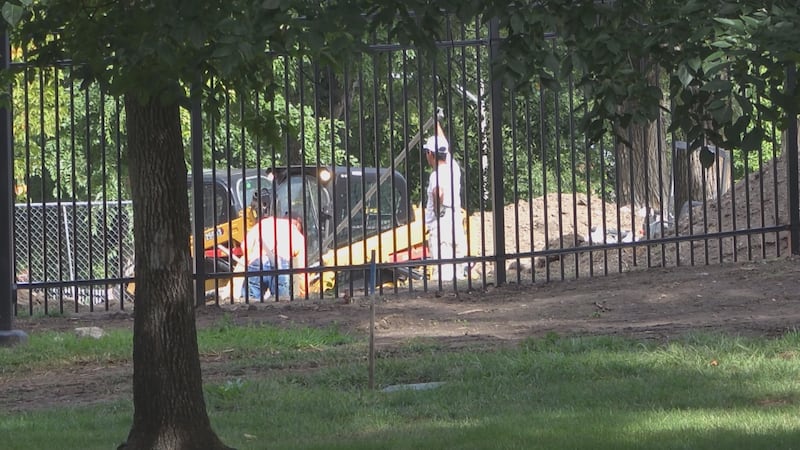
LIBERTY COUNTY, Ga. (WTOC) - The streets of Liberty County are busy and they’re growing.
“It’s gone from a traditional rural community and now we’re a little bit urban even,” said Donald Lovette, Liberty County Board of Commission Chairman. “Approximately 70,000 people in our community.”
Donald Lovette serves as the county’s commission chairman. But these are also the streets he played in as a kid. Streets filled with fond memories and what he calls a rich history.
“Liberty County has its own list of heroes and sheroes who have helped to make America what it is today,” said Lovette.
Many of those figures walked these halls.
It’s a place in Midway called Dorchester Academy. It was founded after the Civil War as a school for freed slaves.
“There was a gentleman who was formerly enslaved, he was elected to the Georgia Legislature, he began to accrue property,” said Hermina Glass-Hill, Founder of The Susie King Taylor Women’s Institute and Ecology Center.
That gentleman— Reverend William A. Golden.
“He donated the first plot of land for a school on this property called the homestead school which then transitions to a school led by the American missionary association and the freedman’s bureau. And the school is called Dorchester Academy,” said Glass-Hill.
Hermina Glass-Hill, who curated the now Dorchester Museum said it was a place to educate young Black children.
And soon turned into one where many Black people would learn to function as voting American citizens.
“Learning phonics, learning how to read, learning how to write your name in cursive, learning how to write a check and fill out a check. Learning how to add,” said Glass-Hill.
Dorchester became a staple for Dr. Martin Luther King Jr.
As civil rights leaders prepared a plan, known as Project C, to hold nonviolent protests in Birmingham, Alabama. The end goal? To end segregation.
“In 1963, King and the SCLC, they came here,” The actual retreat was in this particular building and this is the suite that reverend king slept in as well as others.
It was one of many historical moments here.
Hill, highlights those moments in the museum.
REPORTER: As a black woman, why is it important for you to highlight those hidden stories?
“My great great grandmother was a slave. She couldn’t get an education,” said Glass-Hill. “I am a product, I stand on their shoulders, I am a product of that. And that is a story that I know many African Americans share.”
Copyright 2025 WTOC. All rights reserved.